
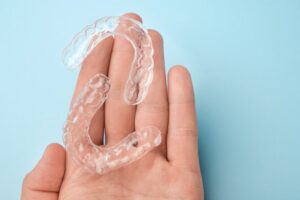
Finishing clear aligner treatment is an exciting milestone for many patients. After months of wearing aligners and watching your smile transform, the final step often involves removing the small tooth-colored bumps attached to certain teeth. These bumps, known as attachments, help the aligners grip the teeth and guide movement more effectively.
Many patients wonder whether removing these attachments will hurt. Fortunately, attachment removal is typically quick, safe, and far less uncomfortable than most people expect.
What Are Clear Aligner Attachments?
Clear aligner attachments are small composite resin shapes bonded to the teeth during treatment. They are usually tooth-colored and designed to blend in with the natural smile.
Attachments help the aligners apply pressure in specific directions to improve tooth movement. Not every patient needs attachments, but they are commonly used for more complex tooth movements.
Once treatment is complete, the attachments are no longer necessary and are removed by the dentist or orthodontist.
How Are Attachments Removed?
The removal process is generally simple and minimally invasive. Your dental provider uses special polishing or dental instruments to carefully break down and remove the composite material from the surface of the teeth.
The procedure does not involve removing healthy tooth structure. Instead, the goal is simply to eliminate the bonded attachment material while leaving the enamel intact.
Most appointments are relatively short and can often be completed in a single visit.
Does Attachment Removal Hurt?
For most patients, attachment removal is not painful. Because the attachments are bonded to the outer surface of the teeth, there are no nerves inside the material itself.
You may feel:
- Mild pressure.
- Vibrations from the dental instrument.
- Slight sensitivity in some areas.
However, most patients do not report significant discomfort during the process.
Some teeth may feel temporarily sensitive afterward, especially if they were recently moved during aligner treatment. This sensitivity is usually mild and short-lived.
Your Teeth May Feel Smoother Afterward
Once the attachments are removed and the teeth are polished, many patients notice that their teeth feel smoother and more natural again. The polishing process helps remove any remaining adhesive and leaves the enamel feeling clean.
At this stage, patients often transition into wearing retainers to help maintain their new smile alignment.
Protecting Your Smile After Treatment
Even after attachments are removed, maintaining your orthodontic results remains important. Patients should continue:
- Wearing retainers as instructed.
- Practicing good oral hygiene.
- Attending regular dental visits.
These habits help preserve the results achieved during treatment.
Having clear aligner attachments removed is typically a comfortable and straightforward process. Most patients experience little to no pain, and any mild sensitivity afterward usually fades quickly. If you are nearing the end of your aligner treatment, attachment removal is simply one final step toward enjoying your newly straightened smile.
About the Author
Dr. Sean Brown attended dental school at the University of Buffalo before completing his AEGD residency at the Medical University of South Carolina in Charleston. He’s taken countless hours of continuing education courses in surgical procedures at the Pikos Institute and SPEAR Education. Dr. Brown is also a member of several professional organizations, including the American Dental Association, the South Carolina Dental Association, and the Academy of General Dentistry. If you’d like a straighter smile with clear aligner treatment, book online with us or call our Doylestown office at (215) 348-2224.