
Dental Implants in Doylestown
The Gold Standard for Replacing Missing Teeth
If you’re tired of dealing with missing teeth and unreliable replacements, then dental implants may be exactly what you need. This state-of-the-art treatment replaces an entire tooth from top to bottom, creating a prosthetic that is practically indistinguishable from the real thing. Whether you are missing a single tooth, all of them, or a number in between, Dr. Brown can use implants to bring your smile back to life and restore your oral health for decades to come. The path toward new teeth is easy when you partner with our dental office, and you can get started simply by contacting us today to discuss replacing missing teeth with dental implants in Doylestown.
Why Choose Sean Brown, DDS for Dental Implants?
- Skilled Dentist with Years of Experience Placing Implants
- Dental Implants Placed Right Here in Our Office
- Dental Insurance-Friendly Practice
What Are Dental Implants?
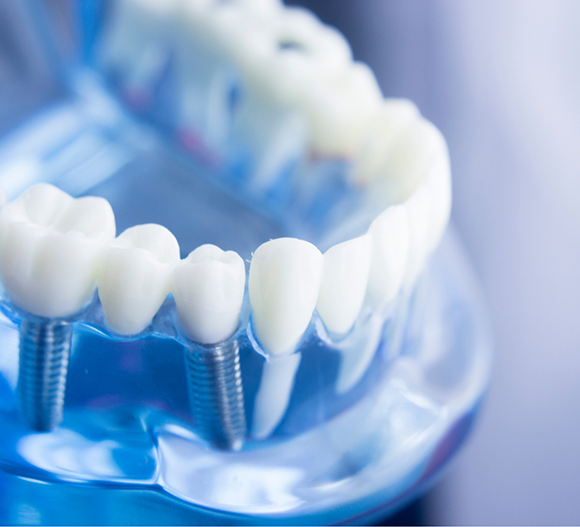
Natural teeth have two parts: the crown you see above the gums, and the roots that anchor them in place. Traditional tooth replacement options like dentures and dental bridges only replace the crowns of missing teeth, which leaves a lot to be desired in terms of stability and comfort. However, dental implants are considered the gold standard for replacing missing teeth because they restore every part of a missing tooth above and below the gumline.
A dental implant is a very short and thin titanium post that is placed directly into the jawbone in the space left by an absent tooth. There, through a natural process called osseointegration, it bonds with the surrounding bone, essentially becoming a new tooth root. This can then be used to support a patient’s dental restoration, including a crown, bridge, or denture.
Dr. Brown’s Training & Expertise in Dental Implants

If you’re hoping to restore your smile with dental implants, Dr. Brown is among the best and most qualified in Doylestown, New Britain, Bucks County, and the surrounding area for completing the treatment. He completed his AEGD residency in Charleston and has attended the renowned Pikos Institute in Florida, where he’s completed several dental implant classes. He’s also a proud member of the American Academy of Implant Dentistry. He’s fully invested his time in making sure his patients receive the life-changing smile restorations they deserve.
The 4-Step Dental Implant Process

Unlike regular dental bridges or dentures, rebuilding your teeth from the roots up is quite complex. This means that the dental implant process requires multiple appointments that can span several months to a year or longer. In the end, though, you’ll have a beautiful, natural-feeling smile that could potentially last for a lifetime!
During your consultation with Dr. Brown, he’ll go over what you can expect throughout your treatment and answer any questions you may have about how dental implants work. Each patient’s journey is different, but for now, here is a basic outline of the four-step dental implant process.
Initial Dental Implant Consultation
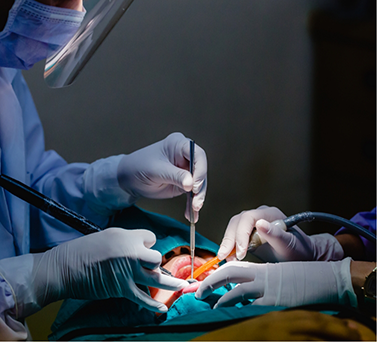
First, you’ll meet with Dr. Brown to discuss the basics of dental implant treatment. He’ll review the specific goals you have for your smile and address any concerns. Then, he’ll go over your medical history and meticulously examine your mouth and jaw to determine whether you’re eligible for dental implants.
There’s a chance he may recommend preparatory procedures before you can schedule your dental implant surgery. Issues like gum disease and inadequate jawbone density can lead to dental implant failure, so you may need to undergo periodontal therapy or bone grafting beforehand. In most cases, we’ll be able to handle all of that right here in our office.
Dental Implant Surgery
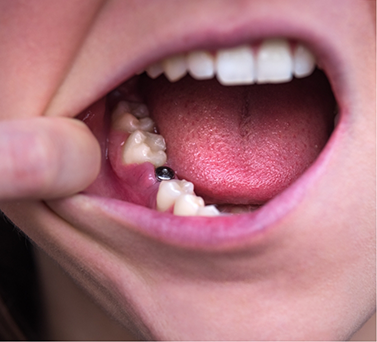
Thanks to Dr. Brown’s training, he can complete the entire implant process safely and efficiently right here in our Doylestown dental office. The procedure begins with numbing your mouth and administering sedation to ensure your comfort. Next, with the help of a 3D printed surgical guide to ensure precision, Dr. Brown will make tiny incisions at precise locations in your gums, through which they can insert the implant posts into your jawbone. The posts are topped with a cap to protect them throughout the healing process. Lastly, Dr. Brown sutures your gums closed, and you’re sent home to recover.
Dental Implant Osseointegration & Abutment
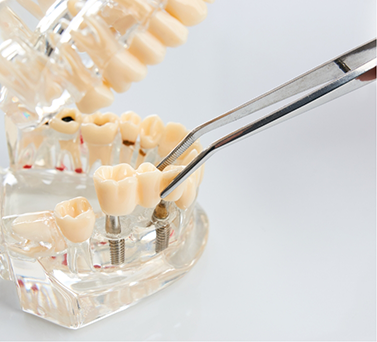
Next comes osseointegration, the process of the biocompatible implant posts encouraging your jawbone to grow around them. While osseointegration is the reason why dental implants are so successful, it takes around four to six months to complete.
When your implants are fully fused to your jaw, you’ll most likely undergo a smaller oral surgery. This time, small metal fixtures called abutments are installed on top of the implant posts to hold your replacement teeth in place. It typically takes about two weeks to recover from abutment surgery.
Delivery of Dental Implant Restoration(s)

At long last, it’s time to receive your brand-new teeth! Once your custom dental crown, bridge, or denture arrives from the dental lab, you’ll return to our office to have Dr. Brown place it onto your abutments. Your implant dentist in Doylestown will make sure your bite looks and feels good before sending you out into the world to enjoy your complete smile!
Benefits of Dental Implants

If you didn’t already know, dental implants are pretty popular as tooth replacements. Statistics show that around 500,000 implants are placed annually. This rising popularity stems from implants’ unique placement method. These restorations are placed directly in the jaw, offering perks that dentures and bridges can’t match. That means they greatly improve your quality of life! To learn more about the benefits of dental implants, just keep reading or contact us for details.
Day-to-Day Benefits

Clearly, patients will first notice implants’ day-to-day advantages. These include the following:
- Lifelike Results – Due to being capped with dental crowns, implants look beautiful and blend with adjacent teeth. As a result, they’re so lifelike that friends and family won’t notice them.
- Boosted Confidence – By filling your smile gaps, implants will boost your confidence levels. Consequently, you’ll feel more self-assured and relaxed in social settings.
- Easy Eating – Since they fuse with your jaw, implants restore a good portion of your bite force. This effect allows you to (once again) eat your favorite tough foods!
- Low-Maintenance Care – Implants don’t need special maintenance like dentures and bridges do. To keep them functional, brush them twice daily, floss between them once daily, and rinse them with mouthwash often.
Health Benefits

Aside from day-to-day benefits, dental implants also offer health-related ones. The most common of such upsides are:
- Stronger Jawbone – Left unaddressed, tooth loss will cause a patient’s jawbone to erode. However, implants can prevent and reverse this erosion. By stimulating the jaw, they’ll stabilize the density of its bone tissue.
- Better Nutrition – Once they’ve strengthened your jaw (see above), implants let you eat a broader range of foods. This increase in meal choices often improves your nutritional health.
- Smile Support – When you lose teeth, the resulting smile gaps tilt your remaining pearly whites until they fall out. Thankfully, implants fill those spaces and thus stop the tilting.
- Fewer Oral Risks – The gaps left by tooth loss let harmful oral bacteria breed. As such, filling them with implants reduces your risk of gum disease and similar issues.
Long-Term Benefits

Lastly, implants provide patients with unique long-term benefits. These positive effects set the prosthetics apart. Typically, they are:
- A High Success Rate – So long as it’s done by a qualified dentist, implant treatment almost always succeeds in the long run. In fact, the procedure’s ten-year success rate is over 95%!
- Enduring Results – On average, an implant’s lifespan ranges from fifteen to twenty years. A well-maintained one, meanwhile, can last for 30 years or more. In either case, an implant could (potentially) restore your smile for a lifetime.
- Cost-Effectiveness – Compared to other options, implants save you more money over time. Due to their longevity (see above), they require far fewer replacement or repair visits. In contrast, dentures and dental bridges usually need expensive follow-up appointments.
Are Dental Implants Right for You?

If you’re missing one, several, or all of your teeth, then you just might be eligible to get dental implants to replace them. Our team will evaluate your oral health during your initial consultation to determine if titanium posts will be best to help you rebuild your smile. If you’re a good candidate, we’ll develop a personalized treatment plan to match your specific dental needs.
Who Is a Good Candidate for Dental Implants?

To be a good candidate for dental implants, you need to meet mainly three requirements:
- Good Overall Health: Since this treatment involves minor oral surgery, you’ll have to be healthy enough to undergo the procedure as well as recover properly for successful results.
- Excellent Oral Health: If you’re experiencing issues with tooth decay, cavities, and gum disease, then we’ll need to address them before moving forward. These can end up increasing the risk of dental implant failure down the road, which can cost you more time, money, and trouble.
- Sufficient Jawbone Density: Your jawbone needs to have enough healthy mass to support the dental implants; otherwise, they can end up becoming loose or they won’t integrate properly from the start.
Even if you don’t currently meet some of these requirements, our team can provide preliminary treatments to prepare your smile, such as bone grafting, gum disease treatment, and tooth extractions. Once you’re ready, Dr. Brown can help determine which type of implant procedure would be right for you, depending on how many teeth you’re missing.
Missing One Tooth
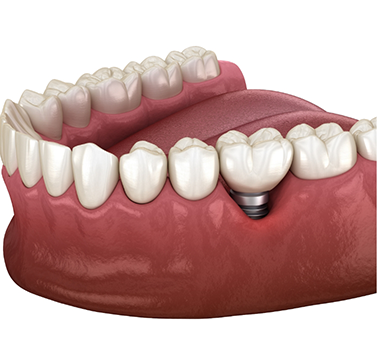
Bringing back a single tooth with a dental implant is relatively simple. A titanium root is placed between two healthy teeth, and this is topped with a porcelain crown. Unlike with a bridge, this approach doesn’t require the nearby teeth to be reshaped to make room for the prosthetic.
Missing Multiple Teeth
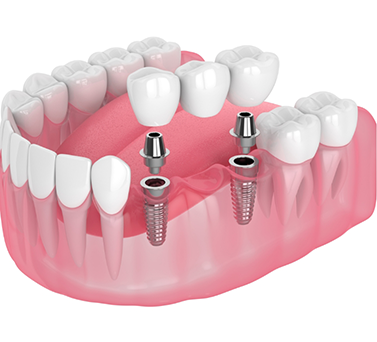
You don’t have to get an individual implant for each missing tooth. Instead, just one or two can be used to secure a bridge or partial denture to the jawbone that restores several teeth at once. These prosthetics are much more secure and long-lasting compared to their removable counterparts.
Missing All Teeth
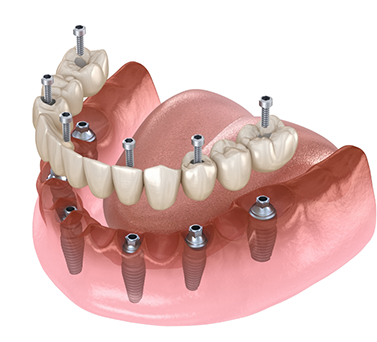
Even total tooth loss can be completely reversed with dental implants. Four to six posts can be placed along the jawbone, which serves as the foundation for a full denture. Implant dentures are smaller and more comfortable compared to regular ones, but they also allow a patient to recover much more bite strength.
Learn More About Implant Dentures
Understanding the Cost of Dental Implants

One of the best parts about dental implants is their longevity. They’re able to last multiple times longer compared to traditional bridges and dentures while providing higher quality results, making them one of the best investments in all of dentistry. The cost of your implant procedure will be based on a few factors, including how many posts are needed, where they are located within the mouth, and what kind of restoration is used. We’ll go over all pricing information at your consultation, so you’ll know exactly what to expect, and we can also help you sign up for financing to make the treatment easily affordable.
Types of Dental Implants
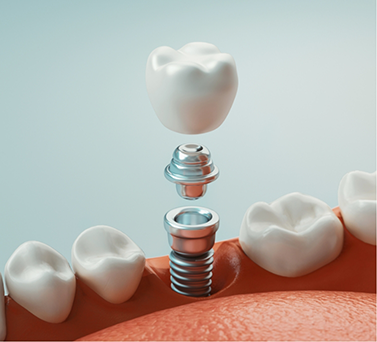
First of all, what exactly are you looking to accomplish with this treatment? Are you only looking to replace a single missing tooth? In that case, you’ll only need one implant along with a crown. On the other hand, if multiple teeth are missing, you may need a bridge or even dentures supported by an appropriate number of implant posts. Beyond, there are a couple of different materials used to make implants, various manufacturers, and a number of different placement techniques.
All of these variables will influence the final cost of dental implants in Doylestown. We’ll discuss these details with you during your consultation so that you understand what needs to happen as well as what your options are.
Are Dental Implants Worth the Investment?

In one word, yes! Unlike other types of tooth replacement, dental implants can last for entire lifetimes, meaning you won’t have to pay for new ones every few years. This alone gives them greater value in the long term. There are also many benefits that you can only enjoy with dental implants, such as having new teeth that are strong and sturdy enough to chew practically any kind of food. The stimulation that implants provide also keeps the jawbone healthy, letting you avoid the complications that bone loss can bring.
Maintaining & Caring for Your Dental Implants

Dental implants have the potential to last a lifetime with the proper care. Fortunately, maintaining and caring for them is an easy task! Essentially, dental implants can be taken care of just like your natural teeth, with no extra steps or cleaning solutions. However, it’s important to keep in mind that a few bad habits can dramatically shorten the lifespan of your newly rebuilt smile. Read on as we cover the five best ways to make sure your dental implants last for decades to come.
Make Oral Hygiene a Priority

The leading cause of dental implant failure is peri-implantitis. This infection in the gums attacks and destroys the connective tissues that help hold dental implants in place. Fortunately, we have a pretty solid grasp on what causes peri-implantitis: poor oral hygiene. Brushing for two minutes twice a day, flossing daily, and rinsing with mouthwash regularly will keep your mouth healthy and strong, not to mention fresh and sparkling!
Eat a Healthy Diet

With dental implants, you’ll regain 80% or more of your natural chewing power. This means you’ll easily be able to eat all your favorite foods once again! Make sure you take advantage of this by eating lots of healthy foods that contain calcium and vitamin C. These nutrients will help strengthen your jawbone and keep your gums healthy, which in turn will ensure your dental implant maintains its strong, sturdy foundation.
Break Bad Habits

If you are replacing your missing teeth with dental implants, now is the time to break bad habits that can damage your new smile:
- Quit smoking: While easier said than done, quitting smoking is one of the best ways to dramatically lower your risk of dental implant failure and keep your mouth healthy.
- Stop chewing on hard objects: Chewing on pencils, pen caps, fingernails, ice, and other hard objects can damage your restoration or cause an infection in the gums.
- Refrain from using your teeth as tools: It may be easy to use your teeth to open packages, hold your car keys for a moment, or tear off price tags, but doing so could send you back to our office with a broken dental implant restoration (or natural tooth) in the blink of an eye!
Protect Your Dental Implants

Dental implants are strong, but not indestructible! If you were to take a particularly hard blow to the face while playing sports, your dental implant could break or be knocked loose. That’s why you need to wear a custom-made sports mouthguard if you play sports. Additionally, if you have bruxism and grind your teeth at night, your dental implant can become worn down and loosen from the excess pressure. In these situations, you need to wear a personalized nightguard for bruxism to keep your smile safe while you sleep.
Schedule Regular Dental Checkups

Whether you’ve replaced one tooth, several teeth, or both arches of pearly whites with dental implants, you should visit us every six months for routine checkups and cleanings. We’ll check to make sure your dental implant is holding up and that there are no small issues developing that you may not have noticed yet. Not only will we provide personalized preventive care, but we’ll thoroughly clean your teeth and implants to minimize your risk of oral healthcare problems and make sure your smile stays dazzling.
Dental Implant FAQs
How Long Do Dental Implants Last?
Most patients can expect their dental implants to last well over three decades. Of course, the exact lifespan will vary significantly from person to person based on many factors, such as oral health and lifestyle. That said, here are some steps you can take to help your new smile last as long as possible:
- Practice good oral hygiene (i.e., brush twice a day, floss daily, rinse daily with an ADA-approved mouthwash)
- Visit your dentist every six months for a checkup and cleaning
- Avoid chewing hard or tough foods
Does Getting Dental Implants Hurt?
Before the procedure begins, Dr. Brown will numb your mouth with a local anesthetic to ensure you’re comfortable throughout. While the surgery itself shouldn’t be painful, you can expect your mouth to feel sore for the first few days following the procedure. Luckily, you can easily manage your discomfort by taking prescribed or over-the-counter pain medication as directed and using cold compresses. If your pain worsens after a few days, don’t hesitate to give our office a call for assistance.
How Long Does It Take to Recover from Dental Implant Surgery?
Many people can resume their usual activities the day after oral surgery. However, you must get as much rest as possible and avoid strenuous exercise for the first week or so, as it could negatively affect the healing process. Any bleeding and swelling you experience should gradually improve after the first couple of days. You can promote faster healing by diligently following the aftercare instructions you were given. Keep in mind that it may take up to six months for your implants to successfully fuse with the jawbone via osseointegration.
Can I Get Dental Implants If I’m Diabetic?
Yes, as long as your diabetes is under control! Uncontrolled diabetes and chronic high blood pressure can delay healing, making it more difficult for your implants to integrate with the jawbone. Therefore, if you’re diabetic and interested in getting implants, you need to talk to your doctor about getting your blood sugar levels under control beforehand.
Can I Take My Dental Implants Out?
A dental implant is unlike any other treatment because it replicates both the root and the crown for a perfect replica of your real tooth, which means it will be set in your jawbone. As a result, you can’t take out dental implants in Doylestown on your own. Only a trained dental professional can remove them, like in cases of failure. Although you can’t remove the posts, some implant dentures can be taken out for easier cleaning.
How Successful Are Dental Implants?
Dental implants are the most reliable method of treating tooth loss, with over a 95% success rate. A healthy mouth and strong jawbone provide predictable results. It’s not uncommon for dental implants to last for 30 years or longer with the right care, like a solid oral hygiene routine, regular care from a dentist, and healthy habits, like not smoking. You can feel confident your investment will thrive for decades by keeping your mouth healthy.
What Are the Warning Signs of Dental Implant Failure?
Dental implant failure is rare. Fewer than 5% of people need to have their implants removed, but it’s best to be vigilant for any concerning issues, like redness, bleeding, or inflammation near the post. Any changes can be a sign of a preventable infection called peri-implantitis. If treated early, your dentist can save your smile before it’s too late. Brushing, flossing, and an antibacterial mouthrinse can keep your gums healthy. Visit your dentist every 6 months for a cleaning and checkup. They’ll check your mouth at every appointment to look for any signs of infections to address them quickly. If you develop any symptoms of peri-implantitis between your regular appointments, don’t wait to contact your dentist.
What Should I Do If My Dental Implant Feels Loose?
After your jawbone has fused with your implants through osseointegration, they should never feel loose. If your implant wiggles or doesn’t feel stable, you need to contact your implant dentist in Doylestown right away. It can be as simple as a loose restoration; however, it is also a symptom of dental implant failure. Your dentist will pinpoint the problem to create the individualized plan you need to maintain a complete smile.
Am I Too Old for Dental Implants?
There’s no age limit for dental implants, which means you can never be too old to rebuild your smile. However, with age comes certain medical conditions and medications that can affect your immune system, which may put you at risk of delayed healing or infections, but that doesn’t mean you’re not a candidate for dental implants. Your dentist will examine your mouth, review a CT scan, and learn more about your medical history to ensure they are right for you. In some situations, older patients require a little prep work, like tooth extractions, gum disease therapy, or bone grafting, to ensure the long-term success of the procedure. Your dentist will create the safe, personalized plan you need to replace your missing teeth.